Don't forget to like the SWAN Facebook page for regular updates on forestry and timber topics. We include a selection of the more popular stories in each newsletter.

SKYSCRAPERS MADE FROM WOOD
"..The age of timber has officially begun, and it’s set to transform the way our cities look and feel. I’ve always believed that every great movement in architecture has been born on the back of a structural innovation,” says Michael Green, a Vancouver architect who recently finished T3, a seven-story building in Minneapolis that is currently the tallest wooden structure in the US. Read more...
"..The age of timber has officially begun, and it’s set to transform the way our cities look and feel. I’ve always believed that every great movement in architecture has been born on the back of a structural innovation,” says Michael Green, a Vancouver architect who recently finished T3, a seven-story building in Minneapolis that is currently the tallest wooden structure in the US. Read more...
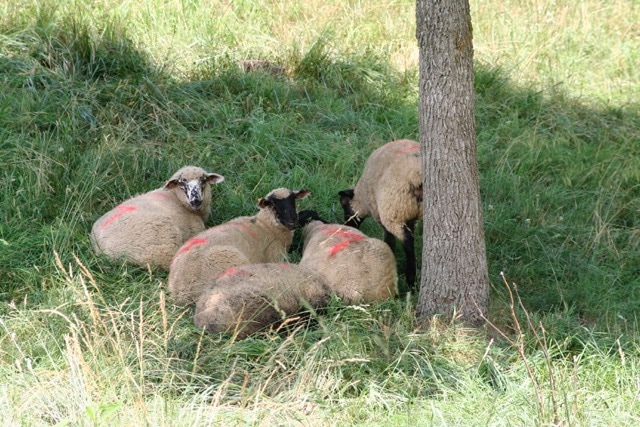
STUDY ON SHEEP COMFORT AND BEHAVIOUR IN SILVOPASTURES
"...lambs in silvopastures actively followed and utilized shade from the trees. In addition, lambs in silvopastures spent more time lying down, while lambs in open pastures stood up more than two hours longer each day than lambs in the silvopastures. More time spent standing indicates greater energy expenditure and greater discomfort experienced by lambs without shade. Lambs in the silvopastures grazed more frequently and more evenly throughout the midday hours compared to the lambs in the open pastures..." Read more...
"...lambs in silvopastures actively followed and utilized shade from the trees. In addition, lambs in silvopastures spent more time lying down, while lambs in open pastures stood up more than two hours longer each day than lambs in the silvopastures. More time spent standing indicates greater energy expenditure and greater discomfort experienced by lambs without shade. Lambs in the silvopastures grazed more frequently and more evenly throughout the midday hours compared to the lambs in the open pastures..." Read more...
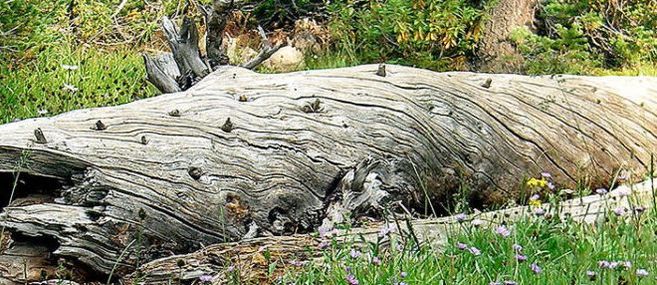
SPIRAL GRAIN IN TREES
"The wood cells in trees growing in a windy area or on an unusually uneven substrate can begin to grow in a spiral pattern to give the tree and branches more strength. A spiral pattern can also develop to strengthen tree trunks tasked with supporting an unusually heavy or uneven canopy.
Spiral grain is more able to twist, rock and roll with the wind than straight-grained branches so that a branch is less likely to break. It also allows branches to more easily bend and move when burdened with heavy snow, to better slough the load.
A spiral grain also efficiently delivers sap and food throughout the tree when a straight grain isn’t sufficient. In a model tree (straight grain, living in ideal conditions), sap and food travel up and down a tree as if on a highway, delivering sustenance to branches and roots located in their straight line of travel..." Read more...
"The wood cells in trees growing in a windy area or on an unusually uneven substrate can begin to grow in a spiral pattern to give the tree and branches more strength. A spiral pattern can also develop to strengthen tree trunks tasked with supporting an unusually heavy or uneven canopy.
Spiral grain is more able to twist, rock and roll with the wind than straight-grained branches so that a branch is less likely to break. It also allows branches to more easily bend and move when burdened with heavy snow, to better slough the load.
A spiral grain also efficiently delivers sap and food throughout the tree when a straight grain isn’t sufficient. In a model tree (straight grain, living in ideal conditions), sap and food travel up and down a tree as if on a highway, delivering sustenance to branches and roots located in their straight line of travel..." Read more...
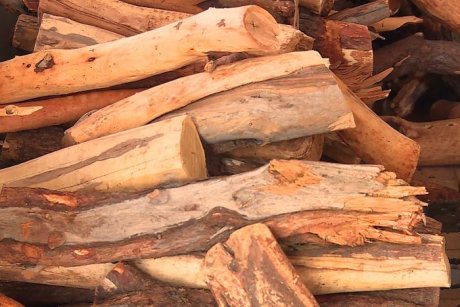
Illegal sandalwood distilling plant uncovered in regional WA
Authorities have uncovered a sophisticated illegal sandalwood processing plant at a property in Western Australia. The Department of Parks and Wildlife worked with WA Police to pounce on the clandestine sandalwood oil distillery last week.
Authorities remain tight lipped about where the illegal set-up was found, except to say it was east of Perth. The operation led to the seizure of distilling equipment and more than 6 tonnes of allegedly illegally harvested sandalwood, worth about $260,000. Read more...
Authorities have uncovered a sophisticated illegal sandalwood processing plant at a property in Western Australia. The Department of Parks and Wildlife worked with WA Police to pounce on the clandestine sandalwood oil distillery last week.
Authorities remain tight lipped about where the illegal set-up was found, except to say it was east of Perth. The operation led to the seizure of distilling equipment and more than 6 tonnes of allegedly illegally harvested sandalwood, worth about $260,000. Read more...
MANAGING A COPPICED EUCALYPT FOREST
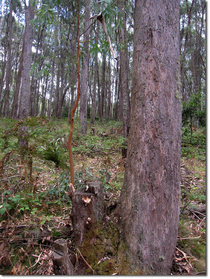
"..I like to describe pruning as being like steering traffic — you’re just directing energy flows, choosing what to keep and favour.
"..In my travels to Morocco, I have seen quite clearly the value of coppicing, where there are eucalyptus trees coppiced about every five years for firewood, simple structures and formwork props for construction. In my childhood my father cut and distilled eucalyptus oil in a four year coppice rotation — the same as his father and his father did, so you can see how perpetual this system is, maintaining the structure and services of a forest while having a continuous harvest of varying products, instead of one harvest every 30+ years and clear-felling the lot, only to replant.
There is an argument that coppiced trees are of a lesser quality, due to the un-proportioned root mass, making the tree grow too fast and having less density in the wood. Read more...
"..I like to describe pruning as being like steering traffic — you’re just directing energy flows, choosing what to keep and favour.
"..In my travels to Morocco, I have seen quite clearly the value of coppicing, where there are eucalyptus trees coppiced about every five years for firewood, simple structures and formwork props for construction. In my childhood my father cut and distilled eucalyptus oil in a four year coppice rotation — the same as his father and his father did, so you can see how perpetual this system is, maintaining the structure and services of a forest while having a continuous harvest of varying products, instead of one harvest every 30+ years and clear-felling the lot, only to replant.
There is an argument that coppiced trees are of a lesser quality, due to the un-proportioned root mass, making the tree grow too fast and having less density in the wood. Read more...

Paper and Print Is Highly Valued
"..Survey results showed that 88 to 91% of respondents agreed that, when responsibly produced, used and recycled, print and paper can be a sustainable way to communicate. Likewise, 85 to 89% agreed that when forests are responsibly managed it is environmentally acceptable to use trees to produce products such as wood for construction and paper for printing.
In general, people recognize the positive environmental attributes of paper, with 94 to 97% agreeing that recyclability is an important characteristic of environmentally responsible products. 61 to 76% agreed that paper is based on a renewable resource, and 86 to 94% agreed that new forest plantations are necessary to counteract global warming. Read more...
"..Survey results showed that 88 to 91% of respondents agreed that, when responsibly produced, used and recycled, print and paper can be a sustainable way to communicate. Likewise, 85 to 89% agreed that when forests are responsibly managed it is environmentally acceptable to use trees to produce products such as wood for construction and paper for printing.
In general, people recognize the positive environmental attributes of paper, with 94 to 97% agreeing that recyclability is an important characteristic of environmentally responsible products. 61 to 76% agreed that paper is based on a renewable resource, and 86 to 94% agreed that new forest plantations are necessary to counteract global warming. Read more...
Plantation timber waste, a new source of renewable energy
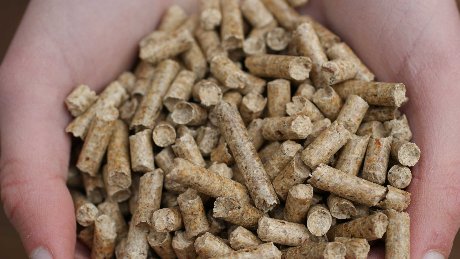
"..unless Australian power generators begin using biopower, all of the material will be shipped to Europe or Asia, where the pellets are considered to be a useful source of renewable energy. Altus Renewables shipped 27,000 tonnes of bioenergy pellets to Denmark in October last year because of the lack of a local market. Read more...
"..unless Australian power generators begin using biopower, all of the material will be shipped to Europe or Asia, where the pellets are considered to be a useful source of renewable energy. Altus Renewables shipped 27,000 tonnes of bioenergy pellets to Denmark in October last year because of the lack of a local market. Read more...